

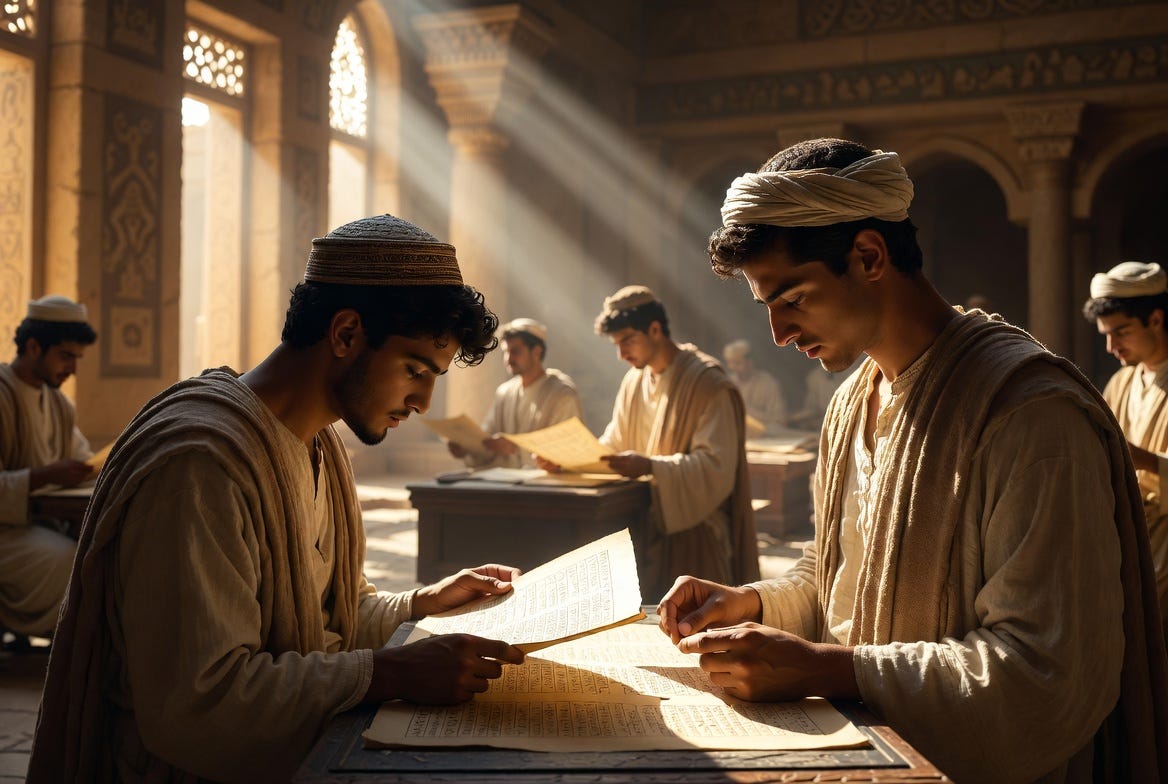
And the King said to Ashpenaz, chief of his eunuchs, to bring from the sons of Israel and from the seed of the king’s and from the nobles, young men who there was no blemish and good in appearance and prudent in all wisdom and knowing knowledge, and understanding knowledge and who was the ability to serve in the king’s palace, and to instruct in the writing and tongue of the Chaldeans (Daniel 1:3–4).
After the capture of Jerusalem in 605 BC, Nebuchadnezzar took the best of the stock of Israel to serve him. He instructed Ashpenaz, the chief of his officials, to select out men from Israel for this purpose. The Hebrew term “saris” comes from the root “to castrate”; however, in many contexts, it functions as the title of a high-ranking government official, not referring to the physical condition. It was customary in Egyptian, Assyrian, Babylonian, and Persian cultures for the males of foreign origin in high governmental positions to be castrated. Thus, this term became synonymous with the position instead of the physical indication of castration.
Among the men taken were Daniel, Hananiah, Mishael, and Azariah, who were sons of Judah (Daniel 1:6). Because they were under the authority of Ashpenaz, this leaves open the question of whether Daniel was a eunuch. Under the Mosaic Law, a eunuch could not enter into the congregation of the LORD (Deuteronomy 23:1). Eunuchs were a subcategory of Israelites who were not recognized as full, legal members of the nation of Israel with the right to participate in the governing of the covenant community. This category did not exclude a man from the promises to Israel. Thus, if Daniel was turned into a eunuch, since Daniel served in Babylon, not over the people of Israel, this condition would not have hindered his ability to serve as a prophet of God.