

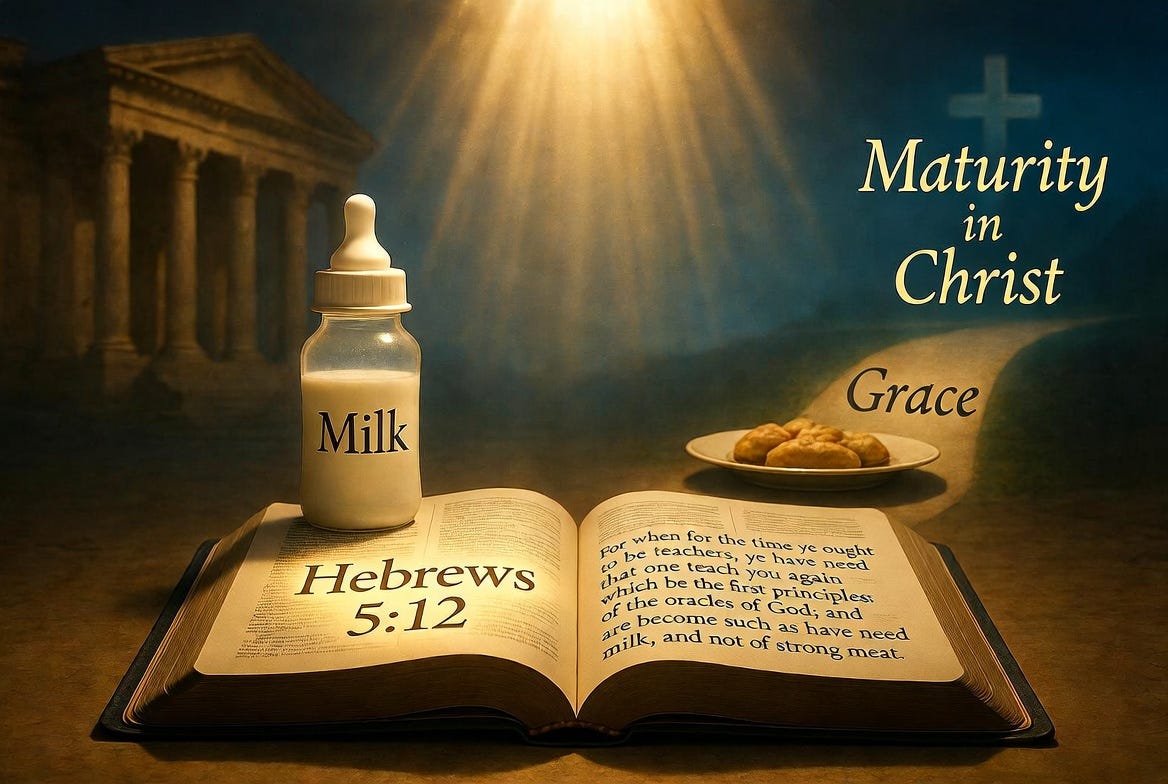
For you also ought to be teachers because of the time; again, you have need of someone to teach you the elementary principles of the beginning of the oracles of God, and you have come to need milk and not solid food (Hebrews 5:12).
The book of Hebrews was written by Paul to the Christians in Jerusalem, who had abandoned grace and returned to law (Acts 21:20). After explaining that, through Jesus’ suffering, He has been placed as a High Priest according to a different order, Paul addresses the consequences of their choices. Their decision to turn away from grace had made them hard of hearing concerning these matters, preventing them from maturing in Christ (Hebrews 5:10).
The elementary principles of the beginning of God’s oracles refer to the words God gave Israel (Romans 3:2). Building on what the saints in Jerusalem already knew, many had witnessed what God was doing. They were present from the beginning of the Church and should have understood the revelation concerning the Messiah: His death for sin and resurrection three days later. They were taught that righteousness comes through faith in Christ, not by works of the law. However, under the influence of the Pharisees, who sought their own righteousness, they rejected grace and returned to the law. Since the law is not out from faith, they could not mature through law (Galatians 3:12). Thus, their return to the law marked a setback in their spiritual growth.
Paul encountered a similar issue in Corinth, where saints could only handle milk. However, in that case, it was because they were carnal—focusing on and fulfilling the desires of the flesh (1 Corinthians 3:2). As a result of this focus, they could not receive Spiritual things. A mind framed on the flesh cannot mature, for it does not have the ability to understand the words from God, for they are spiritually discerned (1 Corinthians 2:14).
In contrast, the Christian who desires the unadulterated milk of the word will grow to maturity and be able to handle the deep things of Christ (1 Peter 2:2). This is one who has his mind framed on the things above and is walking by the Spirit (Colossians 3:1–3; Galatians 5:16).